£135.00
A comprehensive at-home women’s health blood test — full blood count, thyroid, female hormones, liver, kidney, cholesterol and nutrients in one finger-prick sample. UKAS UK lab. From £139.
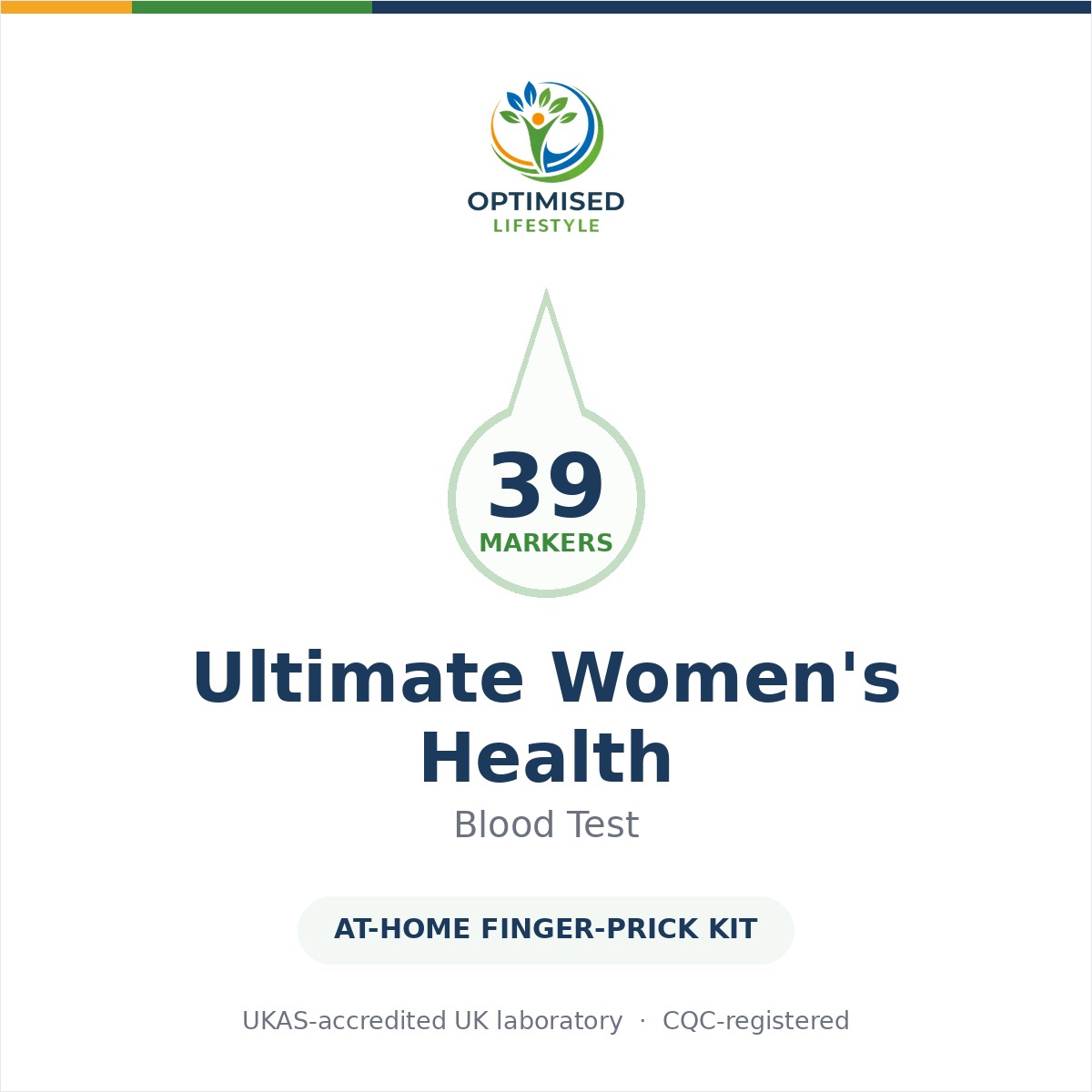
A single finger-prick sample, and a broad picture of how your body is doing across 39 markers. The Ultimate women’s health blood test is built for the active woman over 40 who wants a proper annual baseline — to catch changes around perimenopause, training and nutrition early, and track them over time rather than guess.
We give you access to your data — not medical advice. This test returns laboratory results and general information only. It is not a diagnosis, a treatment or a clinical opinion. No clinician reviews or comments on your results before they reach you — you receive your numbers against standard reference ranges, and interpreting them is for you and your GP. If a result falls outside the reference range, or you feel unwell, contact your GP; in an emergency call 111 or 999. You must be 18 or over to order.
This panel measures 39 biomarkers across 10 areas, analysed in a UKAS-accredited UK laboratory. Every marker is listed in full below.
Why a finger-prick kit, and what it does not include: 7 further markers — Platelets (PLT), Mean Platelet Volume (MPV), Lymphocytes (LYM), Monocytes (MON), Neutrophils (NEU), Eosinophils (EOS) and Basophils — can only be measured reliably from a venous (needle) sample, so they are not reported on an at-home finger-prick test. The 39 markers above are what you receive with this kit. If you want all 46 markers, the clinic-collected version of this same panel is taken by a phlebotomist and returns the full set — including the white-cell differential — with no risk of the sample being rejected in the post.
Ideal for women over 40 wanting a whole-body baseline, and anyone navigating perimenopause or considering HRT who wants their numbers on record. The hormone markers help frame conversations about symptoms and options with your clinician.
Finger-prick samples are occasionally rejected by the laboratory because there is too little blood or the sample is too old to test, which means starting again. Four things make that far less likely: collect in the morning, warm your hands first (run them under warm water and let them hang down for a minute), drink plenty of water beforehand, and post the sample back the same day you take it — never on a Friday or Saturday, so it does not sit in the postal system over a weekend.
Who should not use a home kit: if you take anticoagulants, have a bleeding or clotting disorder, or feel faint at the sight of blood, speak to your GP before testing and consider a clinic-collected panel instead. If bleeding does not stop after firm pressure, seek medical advice.
Because hormones shift across the menstrual cycle, note where you are in your cycle when you test — give that date to your GP, because the hormone markers can only be read in that context. Your report shows numbers against reference ranges and contains no interpretation. This test is for information and monitoring, not diagnosis; discuss anything outside range with a doctor. Your results are private. They are handled as confidential health data and delivered to you securely. They are shared only with our laboratory partner in order to process your test, and otherwise never without your consent.
For cycling women, days 2–5 of your cycle are often used for a baseline of FSH, LH and oestradiol. If your cycle is irregular or absent, test when convenient and note this on your result.
It includes the core female hormones plus thyroid and nutrients that overlap with perimenopausal symptoms, giving useful context. See our perimenopause guide for more.
A morning, fasted sample is best for the cholesterol markers; water is fine during the fast.
Yes — analysed in a UKAS-accredited UK laboratory to clinic standard.
Typicallysent as soon as the laboratory reports them of the lab receiving your sample.
Related: HRT Guide · Perimenopause Guide · Thyroid Test · All blood tests
Only logged in customers who have purchased this product may leave a review.

Join our community and get 10% off your first order. Exclusive offers, new products and research updates direct to your inbox.
No spam. Unsubscribe anytime. Privacy Policy.
Reviews
There are no reviews yet.