£75.00
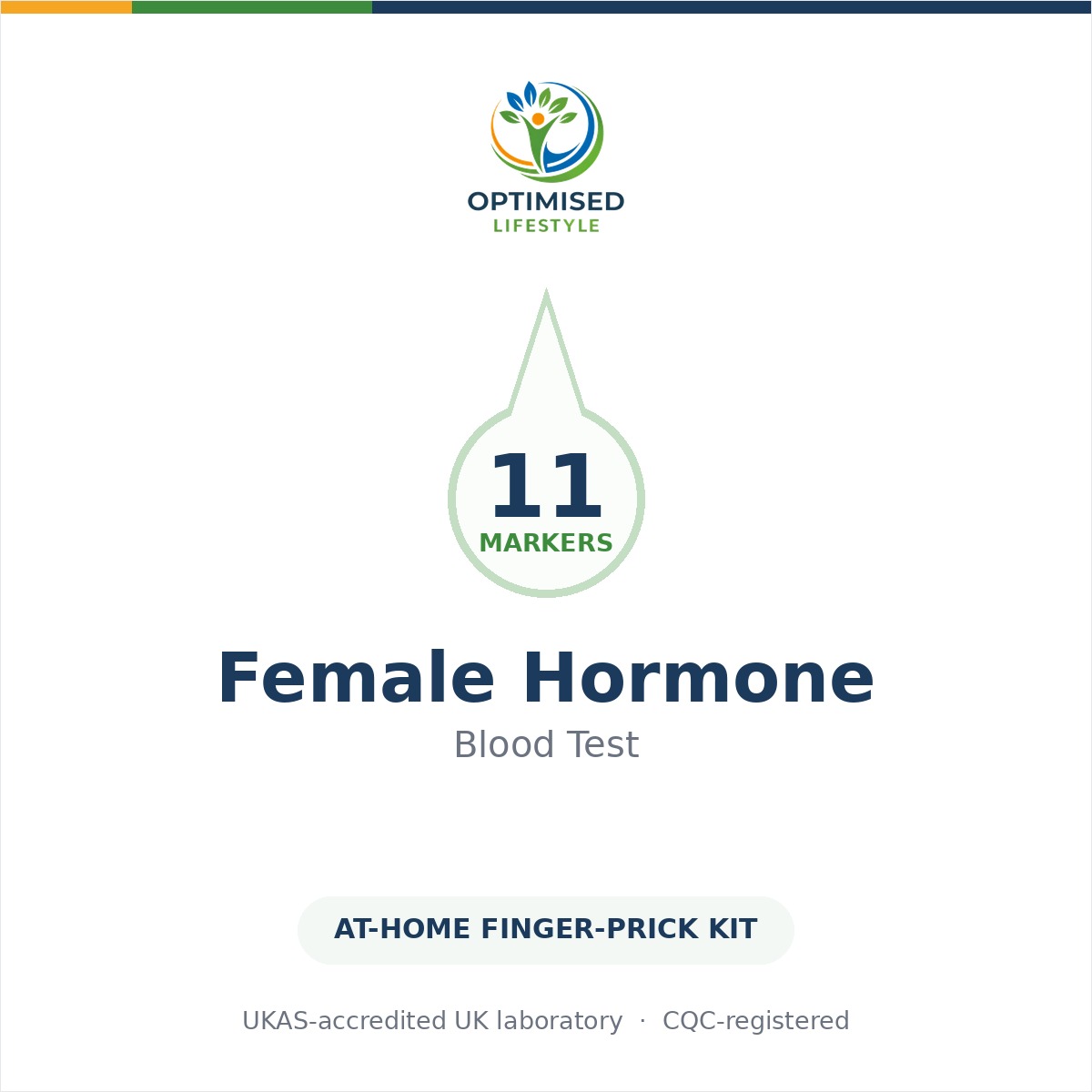
An at-home female hormone panel — oestradiol, FSH, LH, prolactin and testosterone — to see where your cycle, perimenopause or HRT response actually sits.
Energy, mood, cycle changes and sleep are shaped by a set of hormones that shift through your thirties, forties and beyond — and they are measurable. This female hormone blood test covers the oestrogen and pituitary hormones behind the cycle, the thyroid markers whose symptoms are so often mistaken for a hormone problem, prolactin, and the testosterone women also produce. One finger-prick sample at home, eleven markers.
We give you access to your data — not medical advice. This test returns laboratory results and general information only. It is not a diagnosis, a treatment or a clinical opinion. No clinician reviews or comments on your results before they reach you — you receive your numbers against standard reference ranges, and interpreting them is for you and your GP. If a result falls outside the reference range, or you feel unwell, contact your GP; in an emergency call 111 or 999. You must be 18 or over to order.
This panel measures 11 biomarkers across two areas, analysed in a UKAS-accredited UK laboratory. Every marker is listed in full below.
Women who want their hormone numbers on record — whether you are noticing changes around perimenopause, tracking energy and recovery through training, or simply want a baseline before changing anything. For a broader annual picture, the Ultimate Women’s Health Blood Test adds a blood count, liver and kidney function, cholesterol and micronutrients. Background reading: our HRT for women guide and perimenopause guide.
Finger-prick samples are occasionally rejected by the laboratory because there is too little blood or the sample is too old to test, which means starting again. Four things make that far less likely: collect in the morning, warm your hands first (run them under warm water and let them hang down for a minute), drink plenty of water beforehand, and post the sample back the same day you take it — never on a Friday or Saturday, so it does not sit in the postal system over a weekend.
Who should not use a home kit: if you take anticoagulants, have a bleeding or clotting disorder, or feel faint at the sight of blood, speak to your GP before testing and consider a clinic-collected panel instead. If bleeding does not stop after firm pressure, seek medical advice.
Your report shows each marker against its reference range so you can see your numbers clearly. Hormone results are read in the context of where you are in your cycle, so note the date you tested. This test is for information and monitoring, not diagnosis; take anything outside range to your GP. Your results are private. They are handled as confidential health data and delivered to you securely. They are shared only with our laboratory partner in order to process your test, and otherwise never without your consent.
Days 2-5 of your cycle — counting the first day of your period as day 1 — is the usual window for the sex hormones. If your cycle is irregular or has stopped, you can test at any time; note the date and give it to your GP, because these markers can only be read in that context.
Thyroid problems commonly show up as fatigue, low mood, weight change and poor recovery — the same picture people attribute to their sex hormones. Measuring both together avoids chasing the wrong explanation.
FSH, LH and oestradiol are the markers that shift as menopause approaches, and all three are included. They add useful context to symptoms, but perimenopause is diagnosed clinically — discuss your results with your GP.
This is the focused hormone panel: 11 markers covering the sex hormones and thyroid. The Ultimate Women’s Health test is a broad annual baseline of 39 markers that adds a blood count, liver and kidney function, cholesterol and micronutrients.
Women produce testosterone too, and it is involved in energy, mood, muscle and libido. Measured alongside SHBG it gives context that oestradiol alone does not.
Not for these markers. A morning sample is best, as hormones follow a daily rhythm.
Related: Ultimate Women’s Health · Thyroid Function · Iron & Ferritin · All blood tests
Only logged in customers who have purchased this product may leave a review.

Join our community and get 10% off your first order. Exclusive offers, new products and research updates direct to your inbox.
No spam. Unsubscribe anytime. Privacy Policy.
Reviews
There are no reviews yet.